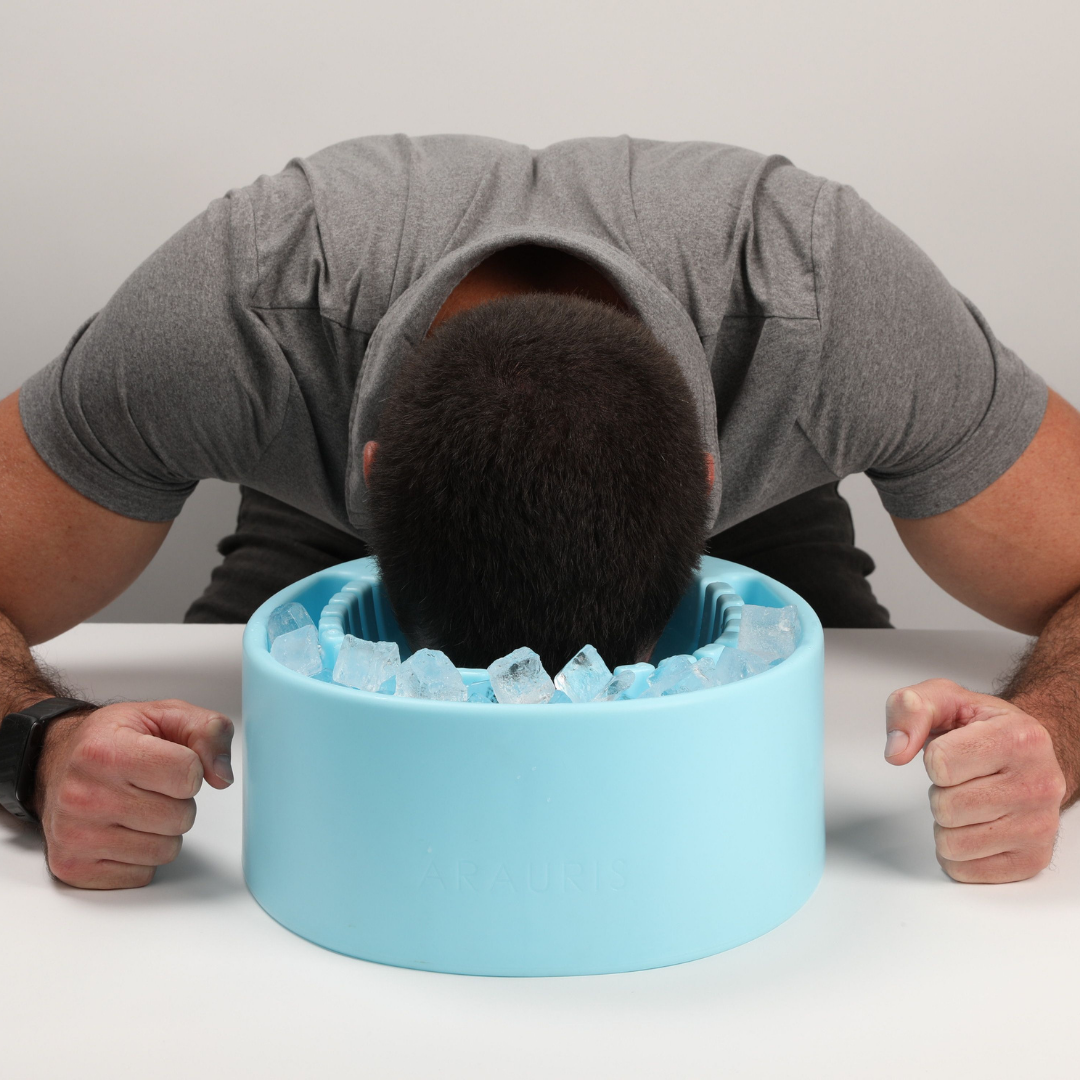
Face plunging isn’t calming because you “believe” it is.
It can feel calming because it triggers a built-in reflex that changes your physiology. Specifically: cold water on the face can activate the mammalian dive reflex, which can slow heart rate and shift the body toward oxygen-conservation mode.
Quick Summary
The mammalian dive reflex is an oxygen-conservation reflex. In humans, cold water on the face can activate nerve pathways that signal the brainstem, which controls heart rate and breathing. The resulting shift may slow the heart rate and breathing as a survival mechanism, which many people experience as calm.
The one-line mechanism: Cold on the face → brainstem reflex → slower heart rate + slower breathing → calmer nervous system state.
What is the mammalian dive reflex?
The mammalian dive reflex is an automatic survival response that helps mammals conserve oxygen when submerged in water, especially cold water.
When the reflex activates, the body shifts into conservation mode. The goal is simple: use oxygen more efficiently and protect critical organs.
Why it exists
- to conserve oxygen during underwater exposure
- to keep vital organs supported while minimizing energy use
- to prioritize survival over comfort
Humans still have this reflex. It’s not as strong as in seals or dolphins (obviously), but it’s real enough to influence heart rate and breathing.
Why the face is the trigger zone
This is what makes face plunging special.
Cold exposure anywhere can be stimulating, but the face is different because it’s loaded with cold receptors and connected to “high priority” cranial nerve pathways that reach the brainstem fast.
Cold receptors around the eyes, forehead, and nose
The areas around the eyes and forehead are especially sensitive. When cold hits this region, the signal is treated as more urgent than cold on the hands or arms.
That’s why a face plunge can create a fast nervous system shift even if the rest of your body stays warm.
Why face beats “cold hands”
Cold hands are uncomfortable. Cold face is interpreted more like “possible submersion.” So the body tends to activate a stronger reflex response.
Practically: cold on the face produces a bigger heart-and-breath change per second of exposure.
What happens in the body during the reflex
The dive reflex is not one thing. It’s a set of coordinated changes the body makes automatically.
The primary effects
- Heart rate decreases (bradycardia response, conservation)
- Breathing slows (less “alarm breathing,” more controlled rhythm)
- The body shifts toward conservation (less wasteful energy output)
The chain (in plain English)
Cold hits the face
→ facial cold receptors activate
→ cranial nerve signals go to the brainstem
→ the brainstem triggers the dive reflex
→ heart rate drops + breathing slows
→ nervous system shifts toward calm regulation
Where the vagus nerve fits in
The vagus nerve matters because it’s one of the major pathways the body uses to shift into parasympathetic (“recovery mode”) activity. It’s often described as the body’s brake pedal.
When the dive reflex is triggered, parasympathetic activity increases. That parasympathetic response is strongly associated with vagal pathways, which is why the vagus nerve gets brought up in face plunging.
Simple version: dive reflex activation tends to increase parasympathetic “brake” activity. Vagus pathways are part of that brake system.
Why it feels calming (even though it’s intense)
This confuses people at first: cold water feels intense, yet the after-effect feels calming.
The intensity comes from the first second of cold receptor activation. The calm comes from what the reflex does next.
Two phases
- Phase 1 (shock): cold receptors fire quickly, you may gasp or tense.
- Phase 2 (flip): the reflex pushes physiology toward slower heart + slower breathing.
Anxiety and panic usually come with the opposite pattern: fast heart rate and shallow breathing. So when the reflex pushes heart rate and breathing down, it can feel like a reset.
Key idea: You don’t “think” your way into calm here. The reflex changes your body first, and the mind often follows.
Face plunge vs full cold plunge (what’s different)
Both can be useful. But they are not the same tool.
Face Plunge
- faster trigger
- lower barrier
- less total stress on the body
- more repeatable daily
Best for nervous system regulation, puffiness, and quick resets.
Full Cold Plunge
- more systemic cold load
- harder to recover from
- more intense stress/adaptation
- more total time and setup
Best for broader cold training and whole-body stimulus (when used appropriately).
What the science does and does not claim
What it does support
- the dive reflex is real physiology
- cold on the face can influence heart rate and breathing via reflex pathways
- state changes can feel immediate because the pathway is automatic
What it does not prove
- that face plunging “cures” anxiety, depression, or chronic illness
- that colder is always better
- that everyone will feel the same effects
Face plunging is best viewed as a reliable nervous system tool. It is not a miracle cure.
How to use the reflex safely
The safest, most effective way to use this reflex is to keep it controlled.
Safe use checklist
- Use short rounds (10–30 seconds)
- Exhale before submerging (reduces shock response)
- Be consistent (repeatability beats intensity)
- Stop if dizzy (do not push through it)
Use caution if you have heart conditions or blood pressure issues, are pregnant, are prone to fainting, or have strong panic responses to cold. If you have medical concerns, consult a clinician before starting cold exposure routines.
CTA
If you want the calm switch without the full plunge, start with face plunging. Cold on the face is one of the fastest ways to access this reflex safely and consistently.
Internal links
- Overview: Why Cold Water on Your Face Instantly Calms You (The Vagus Nerve Reset)
- How-to: How to Stimulate the Vagus Nerve at Home (Face Plunge Method, Step-by-Step)
Share:
How to Stimulate the Vagus Nerve at Home (The Face Plunge Method)
Stuck in Fight-or-Flight? Try This 60-Second Vagus Nerve Reset