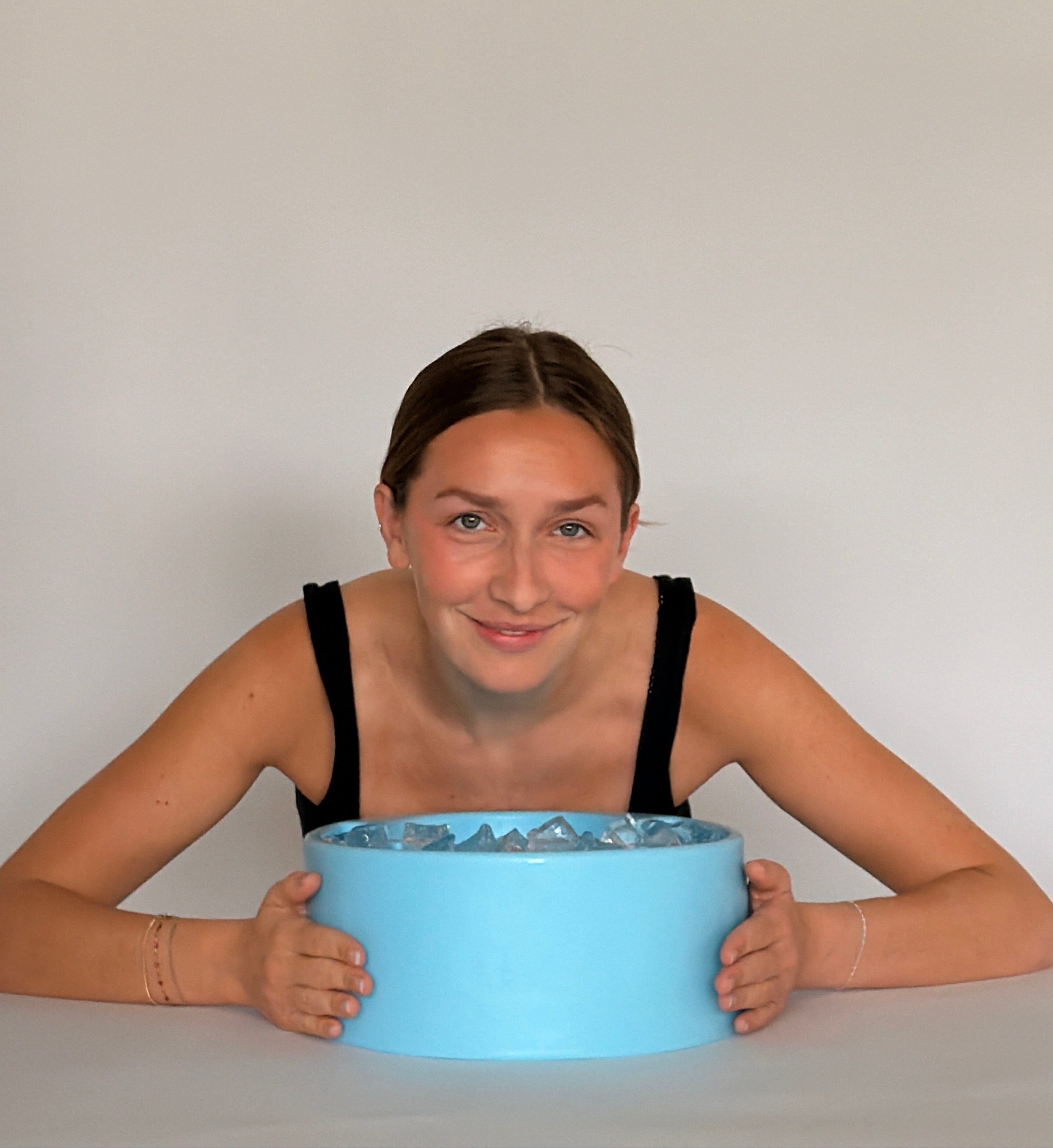
If you’re feeling wired-but-tired, stuck in your head, and unable to fully relax, you’re not broken.
You’re likely dysregulated. Meaning: your nervous system is still acting like there’s a threat, even if you’re sitting on the couch.
The good news is that regulation isn’t mysterious. It’s physical. If you can shift your breathing and heart rate, you can often shift your mental state too.
Quick Summary
When you’re stuck in fight-or-flight, your body is in “go mode” (fast heart, shallow breath, high alert). Cold water on the face can trigger a reflex that slows heart rate and breathing, helping you return toward baseline. This is why a 60-second face plunge can act like a fast nervous system reset.
Key idea: The goal isn’t to eliminate stress. It’s to recover from it faster.
Signs your nervous system is stuck in “go mode”
Fight-or-flight isn’t always panic. For many people it shows up as constant low-grade stress.
- Tight chest or shallow breathing
- Doomscroll brain (can’t stop checking your phone)
- Irritability or emotional overreaction
- Trouble sleeping (tired but can’t shut off)
- Cravings / impulsivity (snacking, caffeine, stimulation)
These aren’t character flaws. They’re common outcomes of a nervous system stuck in alert mode.
The goal isn’t less stress, it’s faster recovery
Stress happens. Life triggers “go mode.” That’s normal.
The real issue is when your system can’t come back down. That’s what “nervous system regulation” actually means: returning to baseline faster.
This is why vagus nerve tone gets talked about. It’s basically the strength of your body’s brake pedal. When the brake works well, you can shift out of stress faster.
The 60-second pattern interrupt: face plunging
The reason face plunging is useful for stress is that it works through reflex, not willpower.
When cold water hits the face, it activates facial cold receptors that send rapid signals into the brainstem. That can trigger the mammalian dive reflex, an oxygen-conservation response.
What that means in real life
- heart rate can slow
- breathing tends to settle
- your body receives “stabilize” signals
- your mind often feels quieter after
If you want the full science explanation, see: The Mammalian Dive Reflex Explained: Why Cold Water Slows Your Heart Rate.
The anti-panic version (for anxious people)
If cold water makes you panic, you don’t need more toughness. You need a smoother on-ramp.
Step 1
Start with a cold washcloth
Hold it over your eyes, forehead, and cheeks for 10–20 seconds. This gives you the same “trigger zone” without full submersion.
Step 2
Then short dips
Do 5–10 second dips for 3–4 rounds. Come up, breathe, then go again.
Step 3
Build tolerance gradually
The nervous system adapts when the experience stays controlled. If you force long dips and panic, your body learns “cold = danger.” But if you keep it manageable, your body learns “cold = safe,” and the calming effect grows.
Best times to use face plunging for stress
- Before meetings: lower the body’s stress volume before you walk in.
- After arguments: break the physiological stress loop fast.
- After work: use it as a boundary ritual so work stress doesn’t follow you.
- Before bed: test it. Some people get calm; some feel more alert.
What to pair it with (simple)
Face plunging is a fast reset. But pairing it with one additional signal makes it stronger.
- Slow exhale breathing: 4 seconds in, 6–8 seconds out, for 60 seconds.
- Short walk: 3–10 minutes outside resets the brain faster than you think.
- Morning sunlight: helps stabilize mood and sleep rhythm (which improves regulation long-term).
A 7-day nervous system reset plan
You’re not doing this for a single dramatic moment. You’re training faster recovery.
- Days 1–2: 10 second dips x 3 rounds (cold tap water only)
- Days 3–4: 15 second dips x 3 rounds
- Days 5–7: 20–30 second dips x 2 rounds
CTA
Use it as your “back to baseline” ritual once per day. When stress hits, don’t wait until you’re spiraling. Reset early.
Internal links
- Overview: Why Cold Water on Your Face Instantly Calms You (The Vagus Nerve Reset)
- How-to: How to Stimulate the Vagus Nerve at Home (Face Plunge Method)
- Science: The Mammalian Dive Reflex Explained: Why Cold Water Slows Your Heart Rate
Share:
The Mammalian Dive Reflex Explained: Why Cold Water Slows Your Heart Rate
Vagus Nerve and Your Skin: Why Calm Nervous Systems Look Better