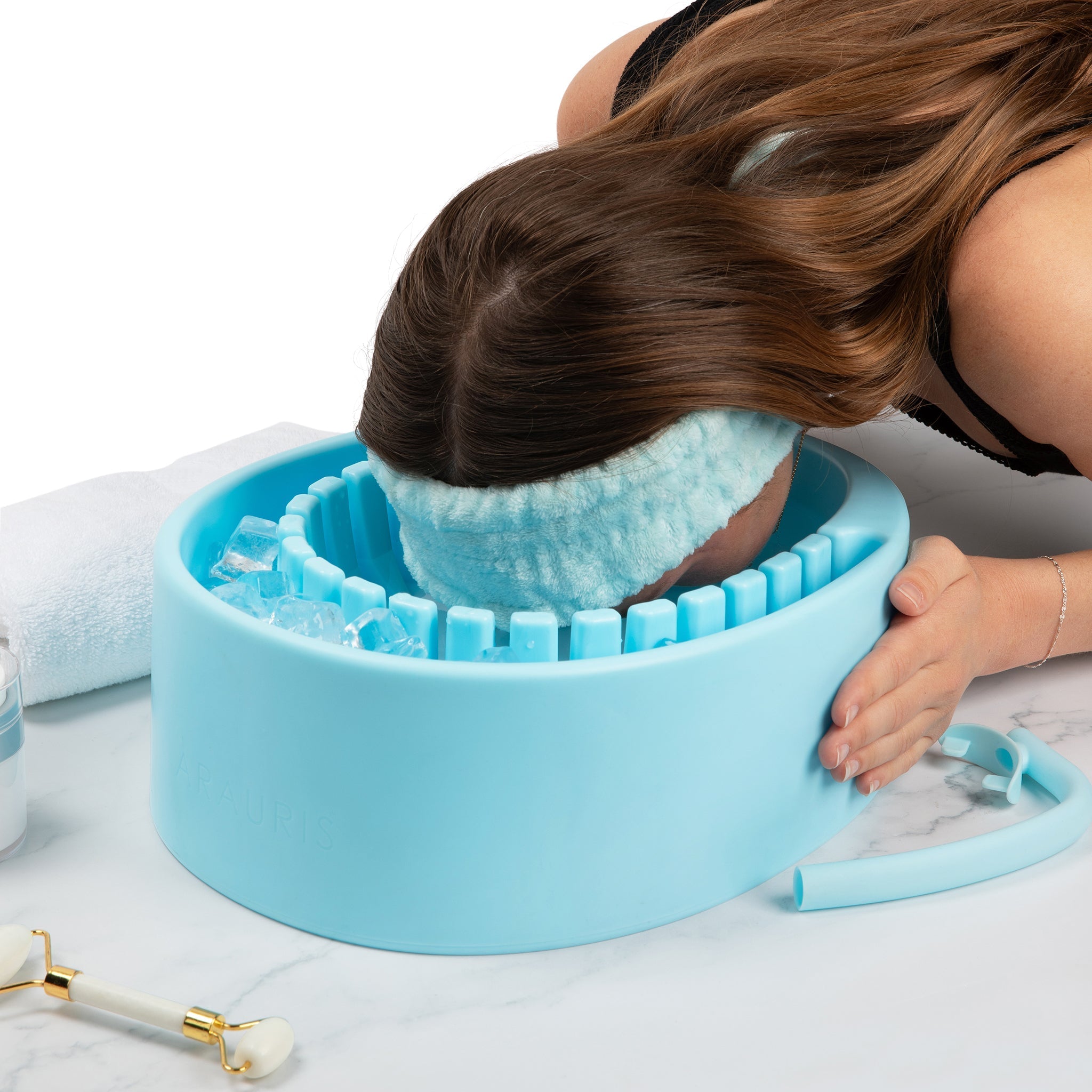
If you want the simplest possible way to calm your nervous system quickly, start here.
A face plunge is the “low barrier” version of cold therapy: no tub, no ice bath, no intense suffering. Just cold water on the face for under a minute.
The reason it works is not motivation or mindset. It’s physiology: cold receptors on the face send fast signals into the brainstem (the control center for heart rate and breathing). That can trigger a reflex response that shifts the body toward calmer regulation.
Quick Summary
Goal: use cold water on the face to trigger a fast nervous system shift.
How: short dips + slow exhale + repeatable protocol (not extreme cold).
Best result: slower breathing, steadier heart rate, quieter mind within 60–90 seconds.
Rule #1: Consistency beats intensity. Cold tap water done daily is better than an ice bowl once a month.
What you need (simple setup)
Required
- Bowl large enough to comfortably submerge your face
- Cold water (cold tap is fine)
- Towel
Optional
- Timer (phone stopwatch)
- Ice (not required)
- Washcloth (for beginners or sensitive users)
You’re not trying to prove toughness. You’re trying to trigger a nervous system shift you can repeat.
The Face Plunge Protocol (Beginner → Advanced)
Choose the level that matches your tolerance. The nervous system only adapts when the process is repeatable.
Beginner 30–60 seconds total
10 seconds x 3–4 rounds
- 10 seconds in
- 10 seconds out
- repeat 3–4 rounds
This is the best starting plan if cold water makes you panic or gasp.
Standard 60–90 seconds total
15–30 seconds x 2–3 rounds
- 15–30 seconds in
- 10–15 seconds out
- repeat 2–3 rounds
This is the sweet spot for most people.
Advanced only if comfortable
30–45 second dips
You can go longer once your body learns that the cold is safe. But longer is not automatically better. If your breathing becomes chaotic or panic rises, shorten the time.
Target outcome: calm after the plunge. If it feels like stress training, you went too hard.
The most important trick: exhale before you plunge
This is the single biggest difference between a face plunge that feels calming vs one that feels like panic.
Cold triggers a “gasp reflex” in many people. If you inhale sharply before going in, you amplify that reflex. But if you exhale slowly first, your body is less likely to interpret the cold as danger.
Do this every time
- inhale normally
- slow exhale until lungs feel mostly empty
- then submerge
What temperature should the water be?
Cold tap water is enough for most people. Ice is optional.
The goal is not “max cold”
You want the cold level that triggers a noticeable shift in breathing and heart rate without making you dread doing it again tomorrow.
Colder is not always better because extreme cold can push you into more stress response, not less. You want controlled exposure.
Best times to do it
- Morning routine: reduces puffiness and clears sleep fog fast.
- Before a stressful event: helps stabilize heart rate and breathing before you walk in.
- After work “reset”: helps break the carryover stress pattern.
- Before bed: some people find it calming; others get more alert. Test it.
Pro move: Use it as a “state change” tool. When your body is in a new state, your behavior is easier to change too.
What you should feel (so you know it’s working)
You’re looking for a specific after-effect. These are the “green lights”:
- Slower breathing (without forcing it)
- Heart rate shift (less pounding)
- Mental quiet (less buzzing / less threat-scanning)
- Warmth after (especially in cheeks and face)
If you come up feeling chaotic breathing and adrenaline, shorten your time and prioritize the exhale.
Common mistakes
- Holding your breath too long. This makes it feel like panic training, not regulation.
- Going too cold too fast. If you dread it, you won’t repeat it.
- Doing it once and quitting. The benefits compound through repeatability.
- Forcing long submersion. Calm is the goal. Comfortably challenging is enough.
Safety notes
Stop immediately if you feel dizzy, faint, or sick. If you’re prone to fainting, do not do this alone.
Use extra caution with heart conditions, blood pressure issues, pregnancy, or strong panic responses to cold. If you have medical concerns, consult a clinician before starting cold exposure routines.
7-Day Face Plunge Challenge
The fastest way to feel the benefit is to make it automatic.
Save this protocol
- Days 1–2: 10 seconds x 3 rounds
- Days 3–4: 15 seconds x 3 rounds
- Days 5–7: 20–30 seconds x 2 rounds
CTA
Save this protocol and try it daily for 7 days. Keep it simple. You’re training recovery, not toughness.
Internal links
- Overview: Why Cold Water on Your Face Instantly Calms You (The Vagus Nerve Reset)
- Stress: Stuck in Fight-or-Flight? Try This 60-Second Vagus Nerve Reset
Share:
Why Cold Water on Your Face Instantly Calms You (The Vagus Nerve Reset)
The Mammalian Dive Reflex Explained: Why Cold Water Slows Your Heart Rate