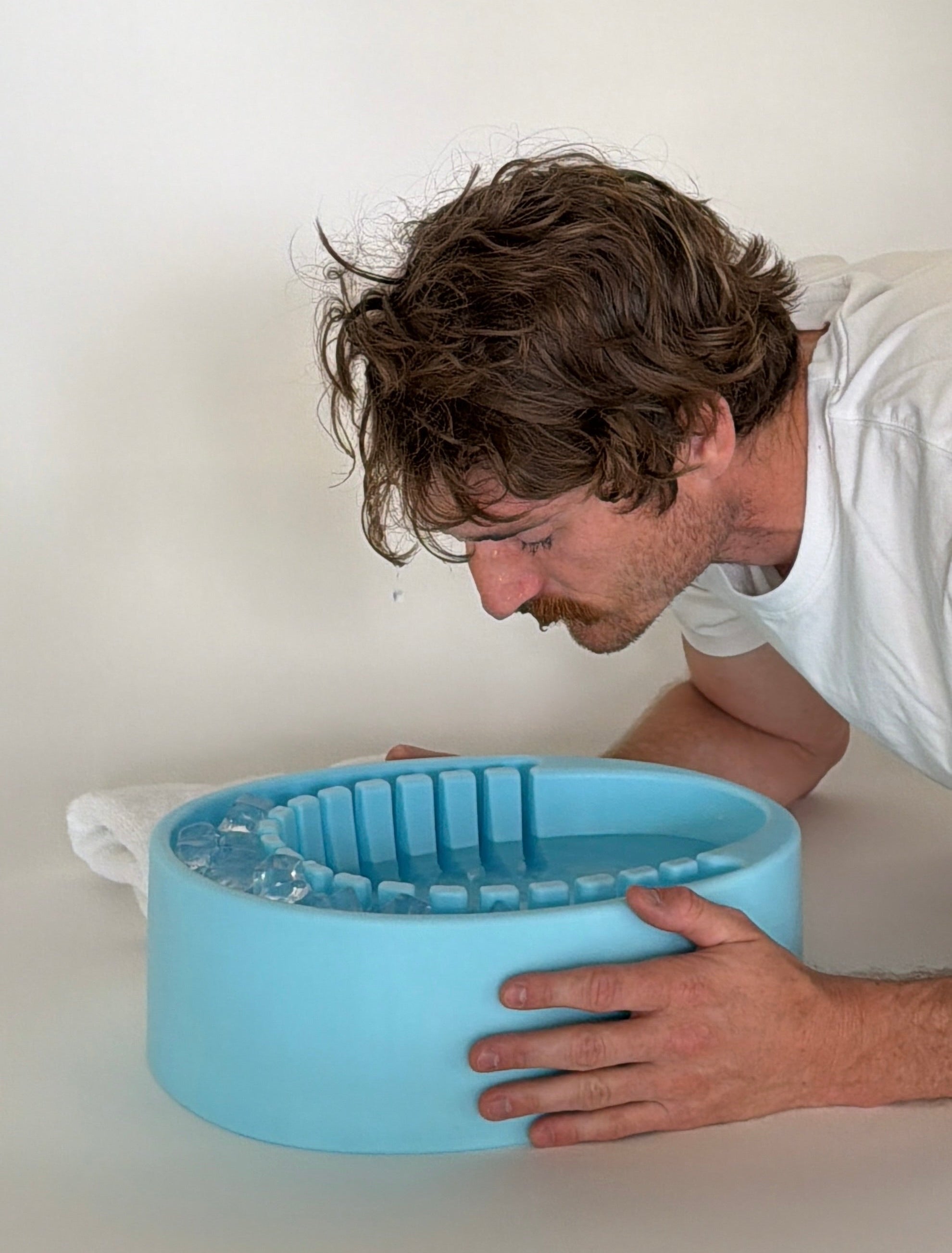
Puffiness. Redness. Dull skin. “Tired face.”
Most people treat these like purely skincare problems. But a lot of the time, your face is simply showing you what your body is doing underneath the surface.
Because beauty isn’t just topical. Stress state shows up on your skin, and cold water face plunging is one of the fastest ways to change that state.
Quick Summary
Face plunging may help your face look less puffy and more awake by changing circulation and fluid movement in facial tissue. It may also support a calmer-looking complexion by helping shift the nervous system out of stress mode. It’s not a miracle cure, but it’s a simple 60-second ritual that many people notice immediately.
Main idea: When your nervous system calms down, your face often looks calmer too.
Why stress shows up on your face
Stress is not just a feeling. It changes your physiology.
When your body is in “go mode” (fight-or-flight), it changes how you breathe, how you sleep, how you hold tension, and how your body manages inflammation and fluid.
What stress can look like on your face
- Facial tension: jaw tightness, brow tension, “resting stressed face”
- Puffiness: especially under eyes and cheeks (often worse in the morning)
- Redness / blotchiness: for some people, stress increases reactivity
- Dullness: poor sleep + lower circulation gives less “life” in the skin
That’s why you can do “everything right” with skincare and still feel like you look tired. The nervous system is upstream.
Where the vagus nerve comes in
The vagus nerve is part of your body’s parasympathetic system, the side responsible for “recovery mode.” When you’re in recovery mode, your breathing slows, heart rate settles, and the body generally functions in a calmer state.
This matters for skin because nervous system regulation is linked with things like inflammation signaling, tension, sleep quality, and recovery. That’s why people say calm nervous systems “look better.”
Keep it simple: when your body is less stressed, it often looks less stressed.
The circulation effect: why cold changes the look of your skin
This is the most immediate and obvious mechanism behind why cold water can change your face fast.
Vasoconstriction (tighten)
Cold exposure causes blood vessels to tighten temporarily. In the face, that can make swelling look smaller, especially in under-eye tissue where even a small amount of fluid is noticeable.
This is part of why cold is commonly used for puffiness.
Vasodilation (rebound glow)
When the cold stops, blood flow returns. That rebound circulation can make skin look more awake and “alive.”
This is the “fresh oxygenated blood return” that people describe as glow.
Puffiness: why face plunging is a cheat code
Puffiness is one of the fastest results people notice, especially in the morning.
Why? Because facial puffiness is often a mix of fluid retention + sleep position + inflammation + overall stress load. Cold helps by tightening vessels and shifting fluid movement in the short term.
Best targets
- morning face puffiness
- under-eye swelling
- cheeks that feel “puffy” after poor sleep
Practical truth: If your main goal is de-puffing, you do not need ice torture. Cold tap water consistency wins.
Redness and irritation (what to expect)
Some people find cold face plunging helps calm redness because it helps them regulate stress and reduce “reactivity.” But this is also where you need to be honest: skin sensitivity varies.
What to expect
- Some people: less redness, calmer look
- Some people: temporary redness right after (then normalizes)
- Sensitive skin / rosacea: effects may vary, start gentle
If you have rosacea, very reactive skin, or cold sensitivity, start with short dips or a cold washcloth first. Keep the water cold, not freezing.
Face plunge routine for glow (simple)
This is the exact routine most people should start with.
Glow routine
- Cold water in bowl Cold tap water is fine. Ice optional.
- Slow exhale before you dip Reduces the shock response and keeps the routine calming.
- Dip 10–20 seconds Do not force long holds. Calm is the goal.
- Repeat 2–4 rounds Short dip, come up, breathe, repeat.
Frequency
- Daily: best for puffiness and consistency
- 3–5x per week: still effective if you want lower commitment
What to do after (skincare pairing)
You don’t need a complicated skincare routine after face plunging. Simple works best.
- Pat dry (do not aggressively rub)
- Moisturizer (lock in hydration)
- Sunscreen in the morning (always)
- Avoid aggressive actives immediately after if your skin is sensitive
The point of this ritual is calm + circulation + recovery. You don’t want to cancel that out with harsh irritation.
CTA
If you want a calmer-looking face fast, try a 60-second plunge in the morning. It’s one of the quickest ways to reduce puffiness and shift out of stress mode.
Internal links
- Overview: Why Cold Water on Your Face Instantly Calms You (The Vagus Nerve Reset)
- How-to: How to Stimulate the Vagus Nerve at Home (Face Plunge Method)
Share:
Stuck in Fight-or-Flight? Try This 60-Second Vagus Nerve Reset
Cold Face Plunge: Benefits, How It Works, and How to Do It Right