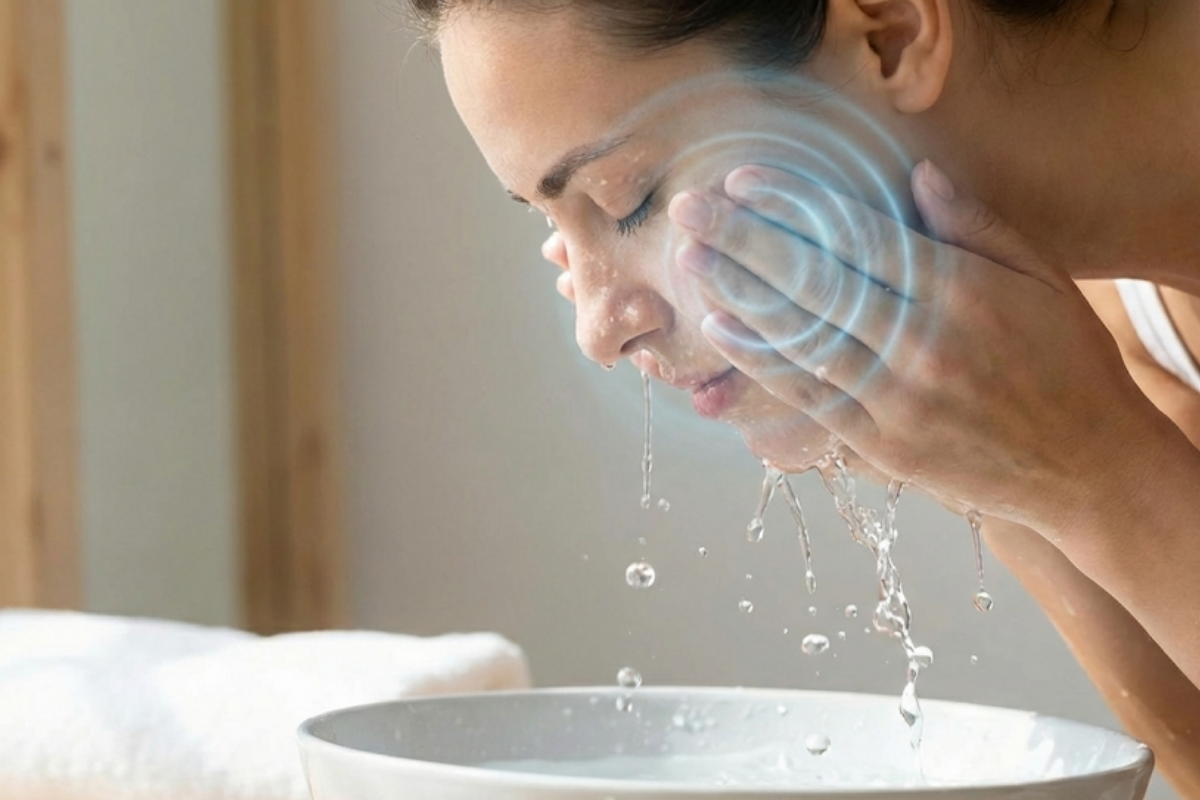
What does splashing cold water on your face do?
That “reset” feeling happens for a simple reason: cold water on your face activates nerve pathways that feed into the part of your brain that controls heart rate and breathing. When heart rate and breathing slow, most people feel calm within seconds.
Quick Summary
A face plunge works because cold water activates facial cold receptors that send rapid signals into your brainstem. Your brainstem can trigger a survival reflex called the mammalian dive reflex, which may slow heart rate and breathing. That shift increases “recovery mode” activity in your nervous system, which is why it can feel like a calm reset in under 60 seconds.
The one-sentence explanation: Cold water on the face triggers a reflex that slows heart rate and breathing, and calm is what your body feels like when that happens.
What people mean by a “Vagus Nerve Reset”
When people say “vagus nerve reset,” they’re usually describing a very specific set of sensations:
- your heart stops pounding
- your breathing deepens
- the “buzz” of stress quiets down
- your body stops feeling on edge
- your face feels tighter and less swollen
Those sensations are controlled by your autonomic nervous system. It runs in the background and constantly asks a question: “Are we safe or are we in danger?”
Cold water on the face is a strong sensory input. It gives your nervous system a clear signal that can quickly change heart rate and breathing. That is why the shift feels sudden.
Your nervous system has two modes
Fight-or-Flight (Sympathetic)
This is “go mode.” It increases alertness by pushing the body toward speed and readiness. That usually means faster heart rate, shallower breathing, and a brain that prioritizes threat-scanning.
In modern life, this can be triggered by deadlines, caffeine, constant notifications, conflict, and poor sleep. Your body reacts to “pressure” the same way it reacts to danger.
Common signs:
- wired but tired
- tense shoulders and jaw
- shallow breathing
- racing thoughts
- irritability or emotional overreaction
Rest-and-Digest (Parasympathetic)
This is “recovery mode.” It supports calm, digestion, deeper breathing, and physical repair. In this state, your body can release tension and stop running hot.
Key idea: Most people don’t need less stress. They need a faster way to exit “go mode.”
A face plunge can help because it directly influences two of the strongest levers of state: heart rate and breathing.
Meet the vagus nerve (your body’s brake pedal)
The vagus nerve is one of the major communication lines between your brain and your body. It connects into systems that influence heart rate, breathing rhythm, digestion, and stress recovery.
Here’s the “why it matters” part: when vagus activity increases, it acts like a brake pedal. It nudges your body toward slower heart rate and slower breathing, which supports recovery mode.
Simple definition: Higher vagal tone often means your body can return to calm faster after stress, because your “brake” works well.
Why cold water on the face works so fast (The Mammalian Dive Reflex)
This is the core “why” behind face plunging.
Your face is loaded with cold-sensitive receptors and fast nerve routes that communicate with your brainstem. The brainstem is the control center for automatic functions like heart rate and breathing. So when cold hits the face, it can trigger a reflex without you having to “think” your way into calm.
The chain
Cold hits facial receptors
→ signals travel through high-priority cranial nerve pathways to the brainstem
→ the brainstem triggers the mammalian dive reflex
→ heart rate and breathing slow
→ the nervous system shifts toward recovery mode
→ you feel calmer
The mammalian dive reflex exists to help mammals conserve oxygen in cold water. That conservation response can include a slower heart rate and changes in breathing rhythm. In other words, the “calm” is not a motivational quote. It is a forced physiological shift.
What can happen next
- a slower heart rate (conservation response)
- slower breathing (less “alarm breathing”)
- a nervous system shift toward calm regulation
This is why face plunging can feel like flipping a switch. The pathway is reflex-driven, meaning it can happen even if you do not “believe” in it.
Why it feels intense at first (and then calming right after)
The first seconds can feel intense because cold receptors fire quickly and your body tries to protect you. That can trigger a gasp or tension response.
But once the reflex kicks in, your physiology often moves in the opposite direction of anxiety. Anxiety usually comes with faster heart rate and shallow breathing. The dive reflex pushes toward slower heart rate and slower breathing.
Practical tip: A slow exhale before the plunge reduces the “gasp reflex” and helps your body accept the cold without turning it into panic.
What a 60-second face plunge can help with (and why)
A face plunge isn’t a cure-all. But if your main issue is being stuck in stress mode, it can be a surprisingly effective pattern interrupt because it changes state through heart rate and breathing.
Common benefits people notice
- Calmer chest: heart rate and breathing slow
- Less anxious energy: the body exits “threat mode”
- Mental clarity: less threat-scanning, more stable attention
- More emotional control: fewer “alarm signals” in the body
- Less puffiness: cold tightens vessels and changes fluid movement
- More awake-looking face: circulation rebounds after the cold
Why slowing heart rate creates calm (the underrated piece)
Most people think calm starts in the mind. Often, it starts in the body.
When your heart rate drops and your breathing becomes slower and deeper, your brain receives feedback that basically says: “We are stable.” That is one reason breathing exercises work. Face plunging can work fast because it nudges that same heart-and-breath shift through reflex.
The beauty connection: why calm can look like glow
Stress shows up on the face because stress changes circulation, inflammation signaling, sleep quality, and muscle tension. Even if you do not feel “stressed,” your body can still be running physiologically hot.
1) Circulation rebound (tighten, then restore)
Cold can cause vasoconstriction (blood vessels tighten). When the cold stops, blood flow returns (vasodilation). That rebound can make the face look less puffy and more awake because circulation and fluid shifts are very visible in facial tissue.
2) Nervous system regulation
When the nervous system shifts toward recovery mode, many people hold less tension and experience fewer stress-driven signals that can show up as redness or irritation. Results vary by person, but the connection between stress state and skin is real.
The 60-Second Face Plunge Protocol (Quick Start)
- Fill with cold water. Cold tap water is enough to start. Do not chase extreme cold. Consistency beats intensity.
- Breathe out fully before submerging. Exhale slowly. This reduces the gasp response and keeps the experience controlled.
- Submerge for 15 to 30 seconds, repeat 2 to 4 rounds. Beginner: 15 seconds in, 10 seconds out, repeat 3 times. Comfortable: 20 to 30 seconds in, repeat 2 to 3 rounds.
- Come up and notice the reset. Pay attention to breathing and heart rate. Most people feel both settle without forcing it.
Who should be cautious
Use caution if you have heart conditions or blood pressure issues, are pregnant, are prone to fainting, or experience strong panic reactions to cold.
If in doubt, start with a cold washcloth on the face first, then build into short dips. Never force it.
The bigger point: this is stress recovery training
Calm isn’t just personality. It’s often physiology. If you can train your body to exit “alarm mode” faster, you feel more stable, think more clearly, and recover better.
Face plunging is a simple way to practice that shift in a controlled way, because it works through reflex and fast state-change levers: heart rate and breathing.
Try this today
Try one round tonight. Cold water, 15 seconds, slow exhale, towel off. You’ll know within one minute whether your body responds well to it.
Next reads
- How to Stimulate the Vagus Nerve at Home (Face Plunge Method, Step-by-Step)
- The Mammalian Dive Reflex Explained: Why Cold Water Slows Your Heart Rate
- Stuck in Fight-or-Flight? Try This 60-Second Vagus Nerve Reset
- Vagus Nerve and Your Skin: Why Calm Nervous Systems Look Better
Share:
Why You Should Stop Using Ice Cubes on Your Face
How to Stimulate the Vagus Nerve at Home (The Face Plunge Method)