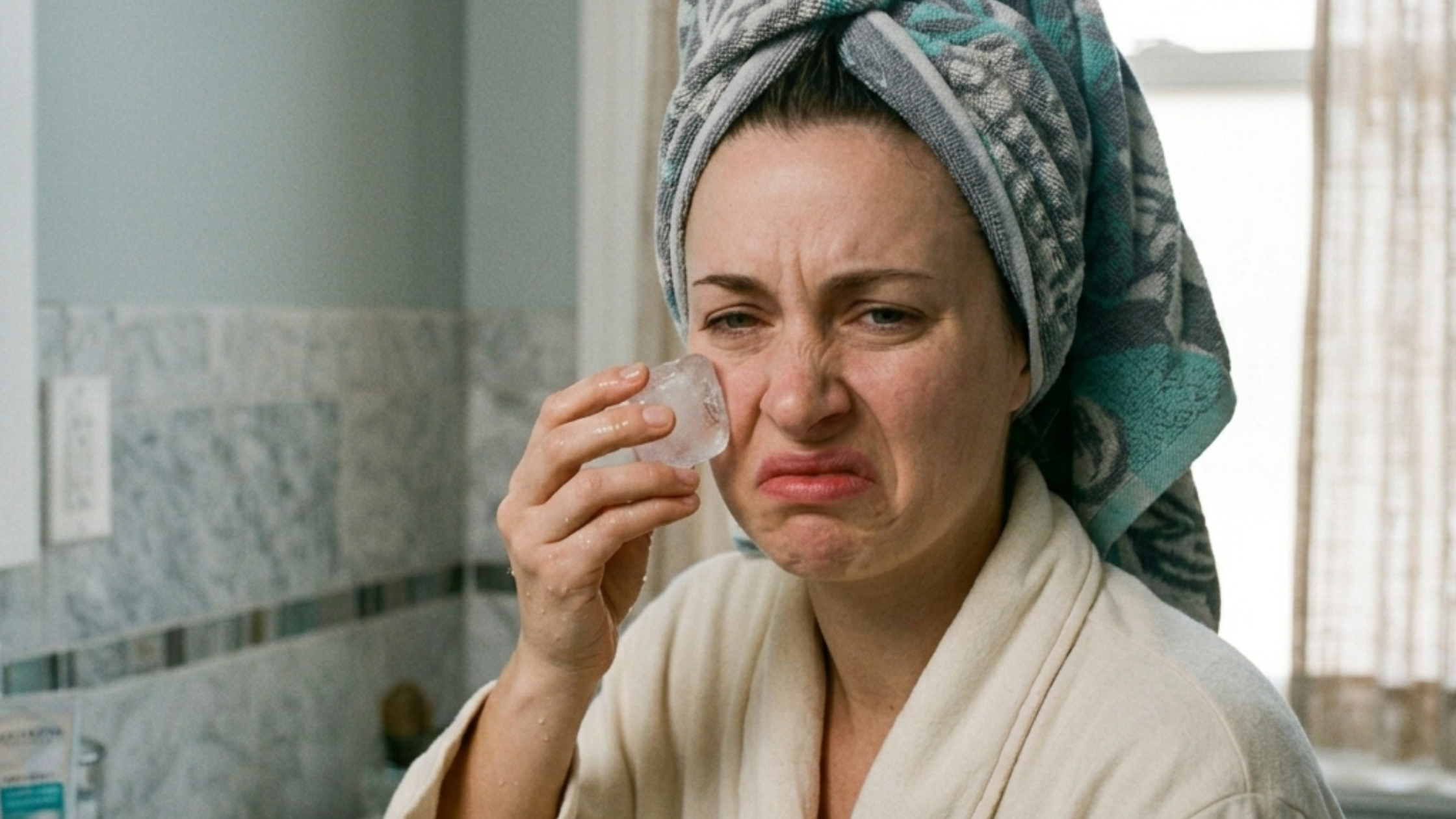
Rubbing a bare ice cube on your face can absolutely damage your skin — broken capillaries, irritation, even mild frostbite if you push it. The cold is great. The direct contact and the rubbing are the problem.
Look, I'm not a dermatologist. I'm a guy who saw a TikTok of a model dragging an ice cube across her cheekbones and thought, "sure, I'll try that on a Tuesday." Ten minutes later my chin looked like I'd lost a fight with a radiator.
So I went down a rabbit hole. Here's what I actually found, in plain English, with the receipts.
Here's the deal
Cold on your face is genuinely useful. It calms inflammation, tightens things up for a few hours, and feels incredible after a bad night's sleep. The catch is how you apply it.
- Bare ice on bare skin = too cold, too fast. Ice sits around 32°F. Skin starts getting unhappy below 50°F.
- Friction makes it worse. Rubbing strips your skin barrier while the cold numbs you, so you don't feel the damage until later.
- Tiny vessels don't bounce back. Those red threads on your cheeks? Often from repeated cold + pressure.
The 5 things going wrong when you rub ice on your face
You're stripping your skin barrier
Friction + cold + bare ice = microscopic damage to the top layer of your skin. The barrier is what keeps moisture in and bacteria out. Wreck it and everything else you do in your routine works less.
IRL: skin feels tight and weirdly sensitive a few hours later.
Broken capillaries on your cheeks and nose
Repeated cold shocks burst the tiny vessels right under your skin. They don't heal back. That's the permanent red web you see on people who skied a lot in the 90s.
IRL: little red threads that no amount of moisturizer fixes.
Cold burns (yes, that's a thing)
Hold ice on one spot for more than ~20 seconds and you get the cold version of a burn. Red, raw, sometimes blistered. The numbness tricks you into leaving it there too long.
IRL: a square of angry pink skin where the cube sat.
Bacteria from whatever was in your freezer
Your ice cube tray lives next to frozen chicken and a mystery bag from 2023. You're rubbing that on an open-pored face. Cool.
IRL: random breakouts the next day you can't explain.
You're getting almost none of the actual benefit
Here's the kicker: the "glow" everyone's chasing comes from cold water immersion, not from rubbing. Submerging the face in cold water briefly hits way more surface area, way more evenly, with zero friction.
IRL: you're doing the painful version of a thing that has an easier, better version.
The vagus nerve sits right under your jaw and around your eye sockets. Brief, even cold on those areas is what actually triggers the calm-down, de-puff, "I look like I slept" effect. Rubbing doesn't do it. Submerging does.
What I actually do now
- ✓Bowl, not cube. Cold water + ice in a bowl, face goes in for 10–15 seconds.
- ✓Breathe out first. Exhale before you plunge so the cold shock doesn't make you gasp.
- ✓Three rounds, max. Anything more is diminishing returns and angry skin.
- ✓Pat dry, then moisturize. Lock in the tightness while it's there.
Don't rub ice on your face.
Do plunge your face in cold water for 10–15 seconds.
You'll get the glow without the broken capillaries.
Try it the right way
The Face Plunge bowl is built for the 10-second cold dip — no rubbing required.
Shop Face Plunge
Share:
Why Celebrities Are Obsessed With the Facial Ice Bath
Why Cold Water Beats Ice Cubes — Every Single Time